







How to Clean and Protect Boat Covers and Bimini Tops
Knowing how to clean boat covers and Bimini tops is one of the easiest ways to protect your boat from sun, water, dirt, mildew, and airborne debris. These marine fabrics act as your boat’s first line of defense, but constant exposure can cause fading, water leakage, stains, and fabric breakdown over time. With the right cleaning and protection routine, you can help extend the life of your boat cover or Bimini top and keep your boat looking its best.
This guide walks you through how to clean and protect boat covers and Bimini tops, including the supplies you need, the safest cleaning method, and how to restore water and stain repellency after washing. Whether you are getting ready for boating season or preparing your boat for storage, these steps will help keep your marine fabric in top condition.
Why Routine Boat Cover and Bimini Top Care Matters
Boat covers and Bimini tops are built for durability, but they endure tough conditions every day. They are constantly exposed to UV rays, wind-blown dirt, and moisture from rain and splashes. Without regular maintenance, the fabric fibers break down, protective coatings wear off, and stains set in permanently.
Here are a few key reasons why routine care is essential:
- Protects against fading and UV damage: Direct sun exposure is the leading cause of discoloration and fiber breakdown. A fabric that is not protected quickly loses its strength and visual appeal.
- Prevents mold and mildew: Moist environments create the perfect conditions for mold growth. Once mildew takes hold, it can be difficult to remove and may leave lasting stains or odors.
- Maintains water repellency: Marine fabrics are designed to shed water, but this ability diminishes over time. If water begins to soak in, the material becomes vulnerable to rot and mold.
- Saves money: Replacing a cover or top is a significant expense. With simple upkeep, you can dramatically increase its lifespan and avoid unnecessary costs.
Ultimately, caring for your fabric is not just about appearances. It is about protecting your investment and ensuring your boating experience remains hassle-free.
-
Gather the Right Boat Cover Cleaning Supplies
The right tools make the process more effective and safer for your fabric. You will need:
- A gentle, marine-safe fabric cleaner
- A fabric protectant designed for outdoor fabrics
- A soft bristle brush or sponge
- A hose with access to clean, fresh water
- A bucket of warm water for mixing or rinsing
- Microfiber towels for drying or touch-ups
Some boaters try to use household detergents or bleach, but these are not recommended. Harsh chemicals can strip away protective coatings, weaken fibers, and shorten the life of marine fabric. Instead, choose cleaners and protectants formulated specifically for outdoor or marine use. Products like 303® Marine Multi-Surface Cleaner and 303® Fabric Guard are widely trusted, but whichever brand you choose, make sure it is safe for marine-grade fabrics such as acrylic, polyester, or canvas.
-
Rinse Away Dirt and Debris
Before you introduce any cleaner, give the fabric a thorough rinse with a hose. This simple step removes dust, sand, salt, and loose debris. It also prevents dirt particles from grinding into the fibers while scrubbing.
A gentle spray is all you need. Avoid high-pressure washers, which can drive water deep into the fabric or damage stitching. Think of this step as preparing the fabric for a deeper clean.
-
Clean the Boat Cover or Bimini Top Fabric
Now it is time to tackle dirt, stains, and buildup. Use a residue-free cleaner like 303® Marine Multi-Surface Cleaner and spray it evenly across the surface. For a large boat cover or Bimini top, work in sections so you can scrub and rinse thoroughly without missing spots.
Using a soft brush or sponge, gently scrub the surface in circular motions. The goal is to loosen dirt without being too aggressive. Excessive force can damage the fibers or remove protective treatments prematurely.
Once you have worked over the entire fabric, rinse thoroughly with clean water.
-
Allow the Fabric to Dry Completely
Patience is important at this stage. The fabric must dry completely before you apply any protection. You can leave the cover or top installed on the boat to dry, or lay it flat in a shaded, well-ventilated area. Avoid folding it while damp, as this can create creases and encourage mold and mildew growth.
Drying times vary depending on weather, but give the fabric at least a few hours. Never use a dryer or heat source to speed up the process. High heat can shrink or damage the material.
-
Apply Fabric Protection
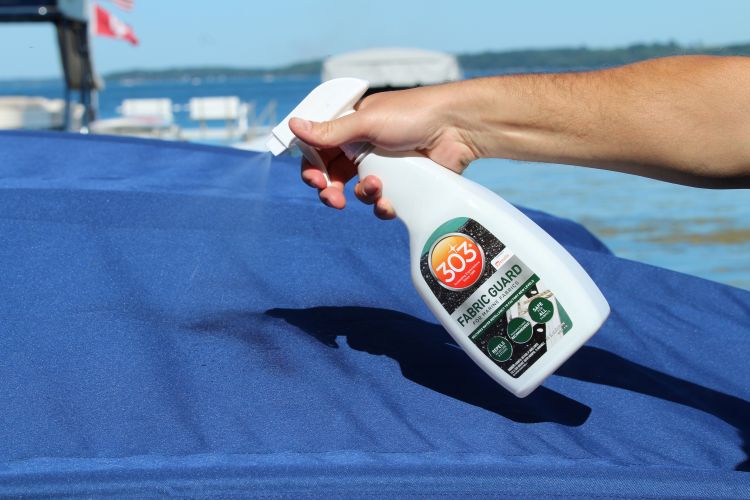
Cleaning removes dirt and buildup, but to help your fabric last, you need to restore water-repellent protection after it dries. 303® Fabric Guard restores lost water and stain repellency to factory levels and is recommended by and for Sunbrella®.
Here is how to apply it properly:
- Make sure the fabric is completely dry, and you are in a well-ventilated area.
- For best results apply in full sun.
- Spray the product evenly in an overlapping, cross-hatch pattern until the fabric is wet to the touch. There is no need to soak the fabric.
- Let the fabric dry for at least 12 to 24 hours before exposing it to water.
When protection is restored, you should see water bead up and roll off the surface rather than soaking in.
Key Takeaways
Boat covers and Bimini tops are hardworking pieces of equipment. They endure the harshest conditions, so your boat does not have to. With a consistent care routine, you can dramatically extend their lifespan while keeping them looking sharp.
The process is simple: rinse away debris, clean with a gentle residue-free solution, allow to dry fully, and reapply fabric protection. Paired with a few long-term care habits like regular rinsing and proper storage, these steps prevent fading, mildew, and water damage.
Choosing the right products helps make this process easier and more effective. Marine-grade cleaners and protectants, such as those from 303®, are designed specifically for the challenges boat fabrics face.
By dedicating a little time to fabric care each season, you can protect your investment, keep your boat looking beautiful, and spend more time enjoying the water instead of dealing with fabric problems.